Healthier Pregnancies Start With Healthier Embryos
Included With Every IVF and INVOcell Cycle
Laser-Assisted Trophectoderm
Biopsy Technology
Both PGT-A and PGT-M
Screening Available
State-of-the-Art On-Site Embryology Lab
At Houston Fertility Center, preimplantation genetic testing is built into every IVF and INVOcell cycle. Rather than treating PGT as an optional add-on at our Houston, TX, clinic, Dr. Kristiansen includes it as a standard part of care, so every embryo transfer is guided by genetic insight. This approach helps identify chromosomally healthy embryos before transfer, supporting better outcomes from the start.
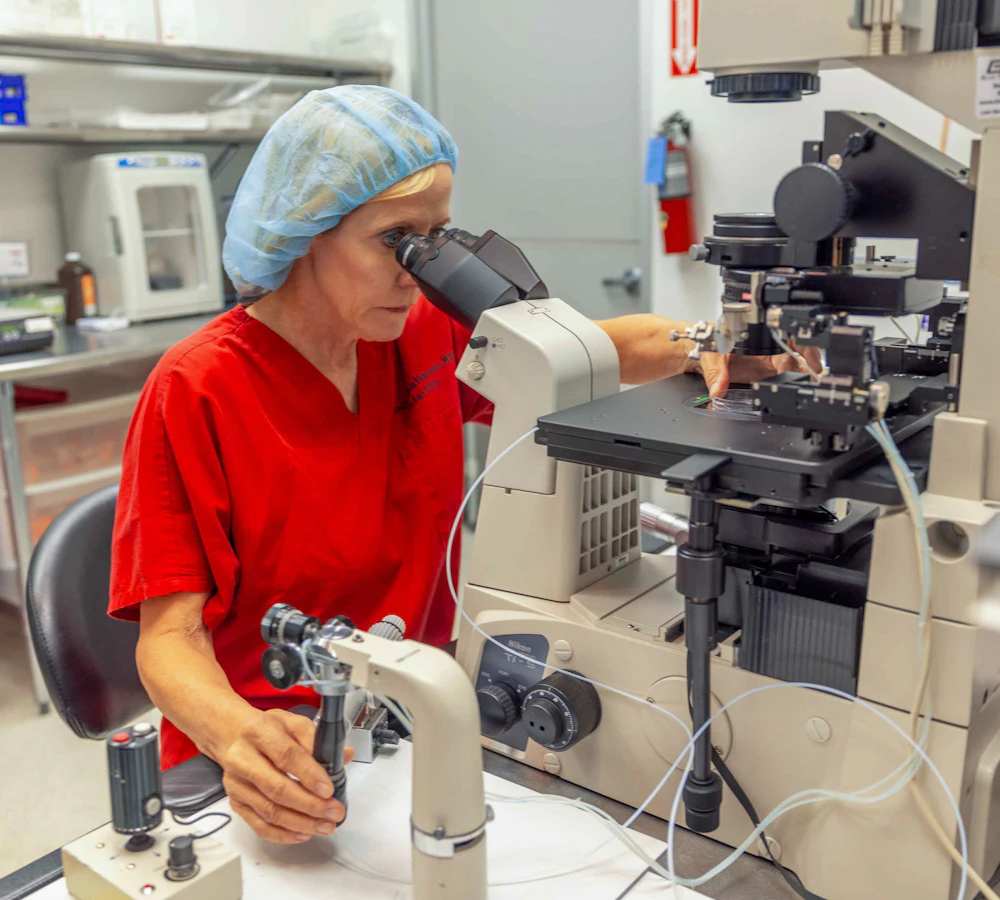
Our embryology lab in Houston, TX, is equipped for trophectoderm biopsy using laser-assisted technology. This method allows our team to safely collect a small sample of cells from the outer layer of a developing embryo without disrupting its growth. Because the lab is on-site, your embryos never leave our care, reducing handling risk and streamlining the testing process.
For patients seeking preimplantation genetic testing in Houston, TX, we offer both PGT-A (aneuploidy screening) and PGT-M (monogenic disorder testing) to address a range of genetic concerns. PGT-A screens embryos for chromosomal abnormalities that can lead to failed implantation or miscarriage. PGT-M tests for specific inherited conditions such as cystic fibrosis, sickle cell disease, and Tay-Sachs disease. When relevant, embryo sex can also be reported as part of the screening process.
Preimplantation genetic testing takes place during an IVF or INVOcell cycle at our Houston fertility center after your embryos have developed to the blastocyst stage, typically around day five or six. At that point, our embryology team performs a trophectoderm biopsy, carefully removing a small cluster of cells from the outer layer of each embryo using laser-assisted technology. The biopsied cells are sent to a genetics laboratory for analysis while your embryos are vitrified, a rapid-freezing method that preserves them safely until results are available.
Once the genetic screening results are in, our fertility doctor in Houston, TX, reviews them with you and selects the healthiest embryo for a frozen embryo transfer (FET). Because the testing and review process takes time, a fresh transfer is not possible when PGT is involved. This is why Houston Fertility Center exclusively uses FET as part of the PGT workflow. The frozen transfer approach also allows your body to recover from the stimulation cycle, which can improve implantation rates.
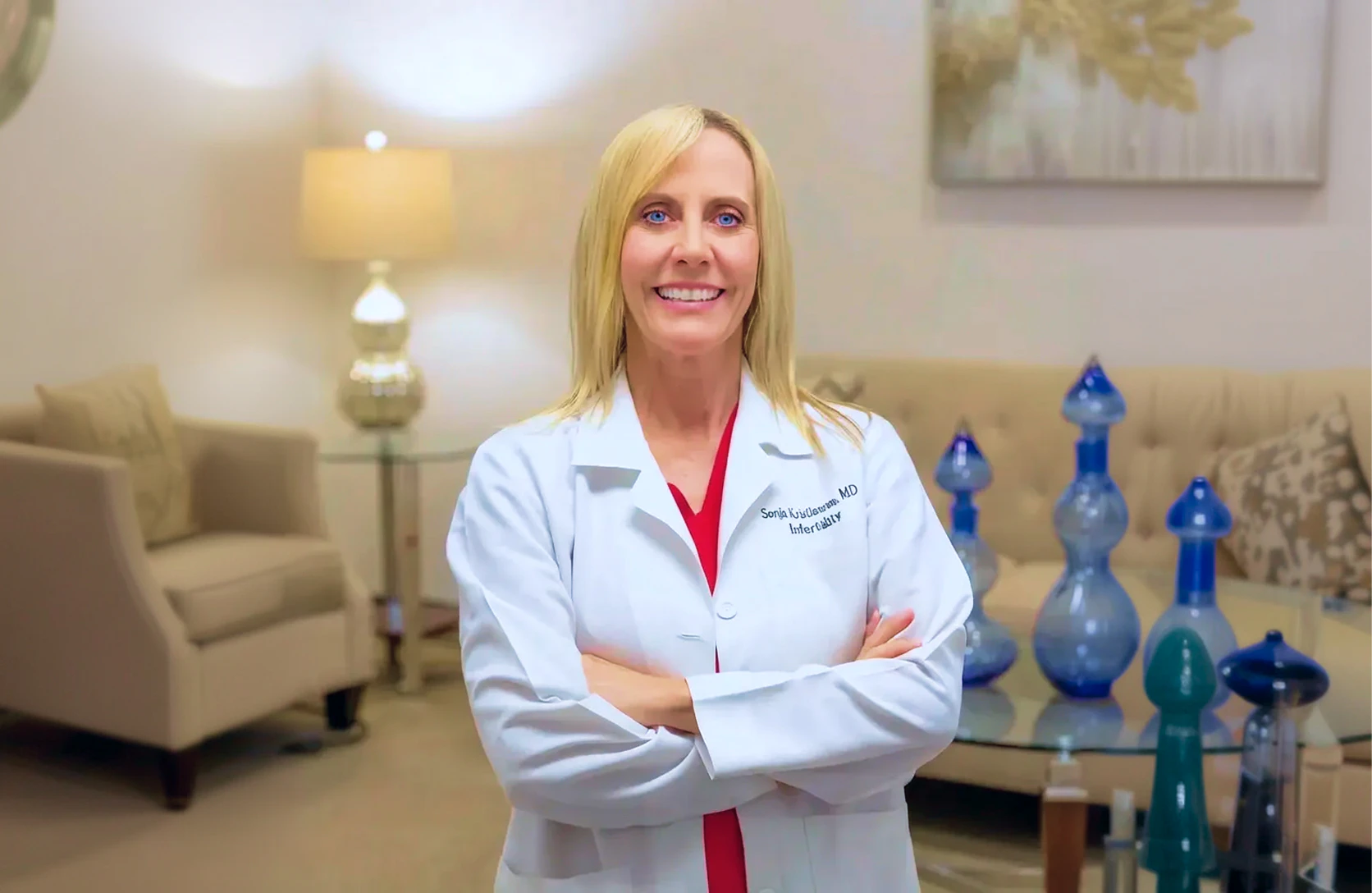
Dr. Sonja Kristiansen is a board-certified Reproductive Endocrinologist and Infertility specialist who founded Houston Fertility Center in 1996. She earned her medical degree from Texas Tech University School of Medicine, completed her OB/GYN residency at John Peter Smith Hospital in Fort Worth, and trained in Reproductive Endocrinology and Infertility through a fellowship at Baylor College of Medicine. With more than 1,000 IVF cycles completed and pregnancy rates that compare well nationally, Dr. Kristiansen brings decades of hands-on experience to every patient's care, including the genetic screening decisions that guide each embryo transfer.
At Houston Fertility Center, preimplantation genetic testing is not billed as a separate service. Unlike many fertility clinics in Houston, TX, PGT is built into the cost of your cycle:
These prices reflect the full cost of your treatment cycle including genetic screening. Medication costs are not included, as prescriptions and dosages vary based on each patient's unique needs. Because PGT requires a frozen embryo transfer, the FET is part of the standard workflow and factored into your cycle plan.
Houston Fertility Center is an independent, non-corporate practice. That means pricing decisions are made in-house with the goal of keeping advanced reproductive care accessible. Our team is happy to review your insurance benefits and walk you through payment options, including financing through third-party providers, so you can move forward with a clear understanding of your investment. Patients travel from across the Houston area, including Cypress, Katy, and Sugar Land, to access affordable PGT at our Katy Freeway location.
Results are typically available within one to two weeks after the embryo biopsy. During this time, your embryos remain safely vitrified in our on-site lab. Dr. Kristiansen will review the results with you before scheduling your frozen embryo transfer.
PGT-A screens embryos for aneuploidy, which means having too many or too few chromosomes. This is the most common type of PGT and is relevant for most patients. PGT-M tests for a specific inherited condition, such as cystic fibrosis or sickle cell disease, and requires prior genetic counseling and test development before your cycle begins.
Because PGT-A analyzes the chromosomal makeup of each embryo, sex is identified as part of the screening process. If you would like to know the sex of your embryos or factor it into your transfer decision, that information can be provided. Houston Fertility Center also offers gender selection as a dedicated service.
The trophectoderm biopsy used for PGT removes a small number of cells from the outer layer of the embryo, which later becomes the placenta. The inner cell mass, which develops into the baby, is not disturbed. This method is widely used in reproductive medicine and is considered safe when performed by an experienced embryology team.
While chromosomal abnormalities are more common in embryos from patients over 35, they can occur at any age. PGT-A can be beneficial for any IVF or INVOcell patient who wants additional information about embryo health before transfer. At Houston Fertility Center, PGT is included with every cycle regardless of age.
Led by board-certified Reproductive Endocrinologist Dr. Sonja Kristiansen, Houston Fertility Center. As a proudly independent practice, we offer transparent pricing: $10,100 for INVOcell with PGT and $14,100 for IVF with PGT.
Our facility welcomes both local and out-of-town patients and is affiliated with leading medical organizations, including:
Whether you're just beginning your fertility journey or exploring advanced treatment options, we're here to support you. Call (713) 862-6181 or contact us online to schedule your consultation.